




You are viewing 2 of your 2 free articles
Global airline accidents fall in 2025, IATA report reveals
Year-on-year operational safety rate improves by 7%
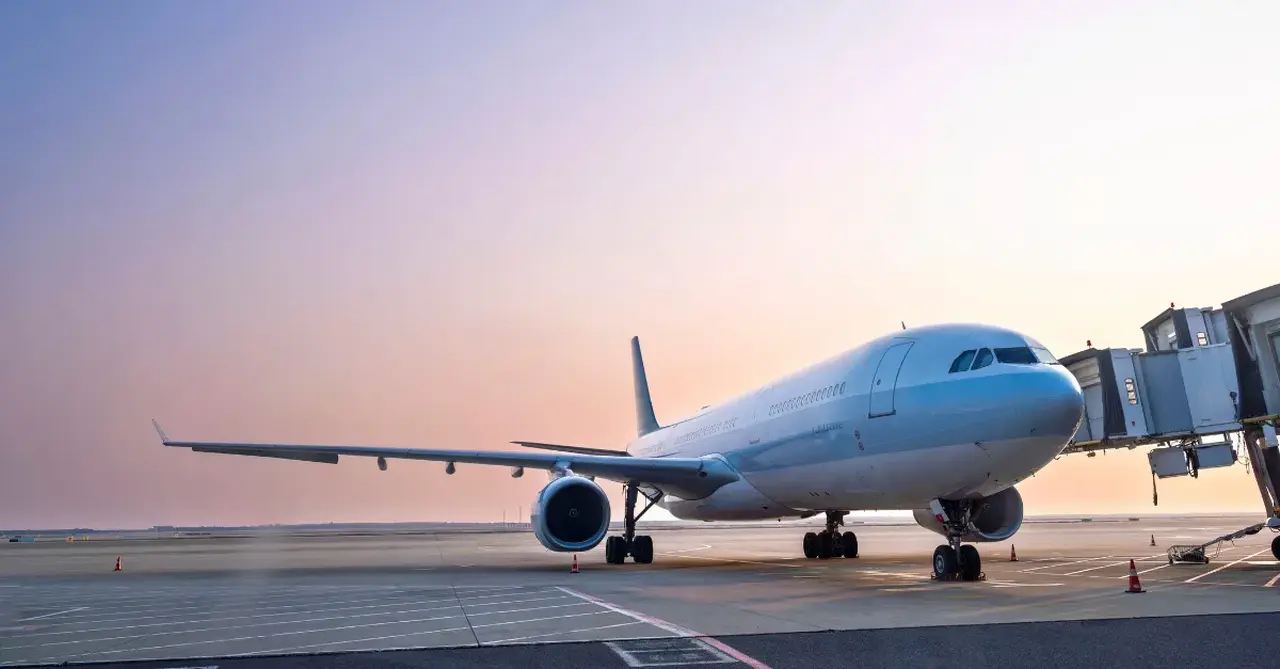
The International Air Transport Association (IATA) has released its 2025 Safety Report, revealing a steady improvement in global aviation safety despite an uptick in fatal incidents.
According to the report, 51 accidents were recorded among 38.7 million flights worldwide in 2025, representing an all-accident rate of 1.32 per million flights, or roughly one accident for every 759,000 flights. This marks a 7% improvement on the 2024 figure of 1.42 accidents per million flights, although slightly above the five-year average of 1.27.
While the overall safety performance improved, the year saw an increase in fatal accidents. IATA recorded eight fatal incidents in 2025, up from seven the previous year, including major events involving Air India Flight 171 and PSA Airlines Flight 5342. Onboard fatalities rose by more than 60%, with 394 deaths compared to 244 in 2024.
Regionally, Africa registered the highest accident rate at 7.86 accidents per million flights, while North America reported the largest number of total accidents for the year.
Despite these figures, IATA emphasised that commercial aviation continues to maintain an exceptionally strong safety record, reinforcing its position as the safest mode of long-distance travel.
RELATED:
Saudi Arabia’s Flyadeal to resume flights to Dubai and Amman
British Airways suspends flights to Abu Dhabi until later in 2026
Iran conflict costing Middle East tourism sector US$600 million a day
Commenting on the report, Willie Walsh, IATA’s Director General, said: “Today, it is one fatal accident for every 5.6 million flights (2021-2025). Flying is so safe that even one accident among the nearly 40 million flights operated annually moves the global data. Every accident is, of course, one too many. The goal for aviation remains zero accidents and zero fatalities.”
Beyond accident statistics, the report also identified emerging risks to flight safety, notably the impact of geopolitical conflicts such as ongoing tensions in the Middle East. IATA stressed that when conflict zones threaten aviation operations, airspace closures and subsequent re-openings must be handled with transparency and close coordination between authorities and industry stakeholders.
“When tensions rise, governments must share timely risk information, ensure effective civil–military coordination, restrict airspace where needed and provide airlines with sufficient information for their own risk assessments,” added Walsh.
In the GCC, airspaces across most countries have reopened since 28 February, except Bahrain and Kuwait, which remain closed until further notice. The evolving situation has increased aviation activity at airports in Saudi Arabia and Oman, as repatriation flights and tourist evacuations are rerouted through these hubs. Gulf Air and Kuwait Airways are currently operating charter flights for residents and citizens via Dammam and Qaisumah airports.
For more information, visit iata.org

















Jacobs Media is a company registered in England and Wales, company number 08713328. 3rd Floor, 52 Grosvenor Gardens, London SW1W 0AU
© 2025 Jacobs Media
