




You are viewing 1 of your 2 free articles
Everything you need to know about flying taxis coming to Dubai in 2026
First vertiport completed at DXB ahead of commercial launch
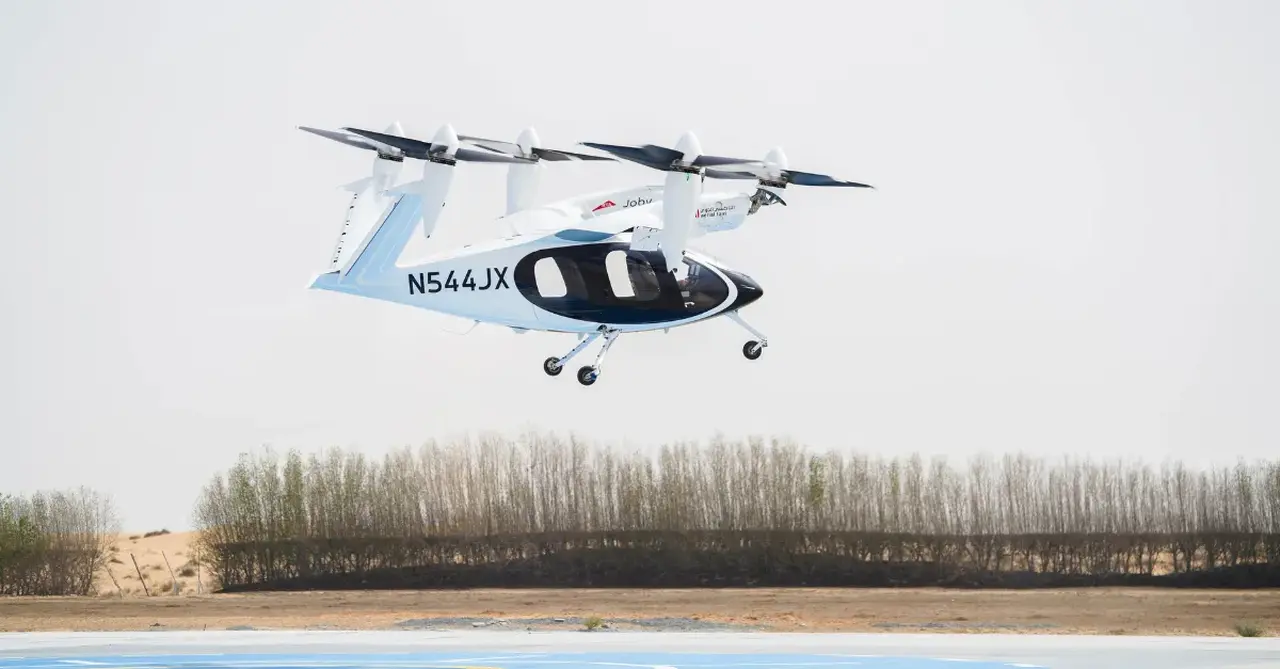
Ahead of the planned 2026 launch, Dubai’s Roads and Transport Authority (RTA) has completed its first air taxi station – or vertiport – near Dubai International Airport (DXB), a four-storey, 3,100-square-metre facility with two take-off and landing pads, charging infrastructure and passenger processing areas.
Developed by RTA in partnership with Joby Aviation and Skyports Infrastructure, the site also includes climate-controlled passenger facilities and a two-level car park.
The DXB station will form part of an initial network of four vertiports across the city, with the other stations located at Dubai Mall, Atlantis The Royal and the American University of Dubai, connecting key neighbourhoods, Downtown Dubai, Dubai Marina and Palm Jumeirah.
Joby signed an agreement with RTA at the 2024 World Government Summit, securing a six-year exclusive partnership to operate air taxi services across the emirate.
As part of the rollout, Uber will deploy Joby’s electric vertical take-off and landing (eVTOL) aircraft for the service, marking a shift towards more sustainable urban air transport. The taxis offer helicopter-like mobility with zero emissions and cruising noise levels as low as 45 decibels.
RELATED:
Everything to know about Dubai’s upcoming underground transport system
Abu Dhabi to boost coastal travel with seagliders by 2028
6 Luxury train journeys launching in 2026
Flown by a commercial pilot, each air taxi can accommodate up to four passengers and is equipped with six propellers and four battery packs, enabling it to travel more than 160km at speeds exceeding 300km per hour. It is expected to carry 170,000 passengers annually.
Flying taxi users will be able to cut travel time from DXB to Palm Jumeirah to under 15 minutes. The service is expected to expand to neighbouring emirates, Abu Dhabi and Ras Al Khaimah (RAK). Air taxis will complete the typically two-hour journey between Abu Dhabi and Dubai in approximately 30 minutes. Fares for inter-emirate trips are expected to cost approximately AED730 (US$200).
Vertiports are also planned for RAK locations including Jebel Jais and the Wynn Resort in Al Marjan Island, improving access to key tourism destinations.
Following their UAE debut, the flying taxis are expected to launch in other major markets worldwide, including New York, Los Angeles, Japan and the UK.
In the Middle East, Joby is set to complete pre-commercial evaluation flights in Saudi Arabia, with air taxis expected to be deployed by next year.
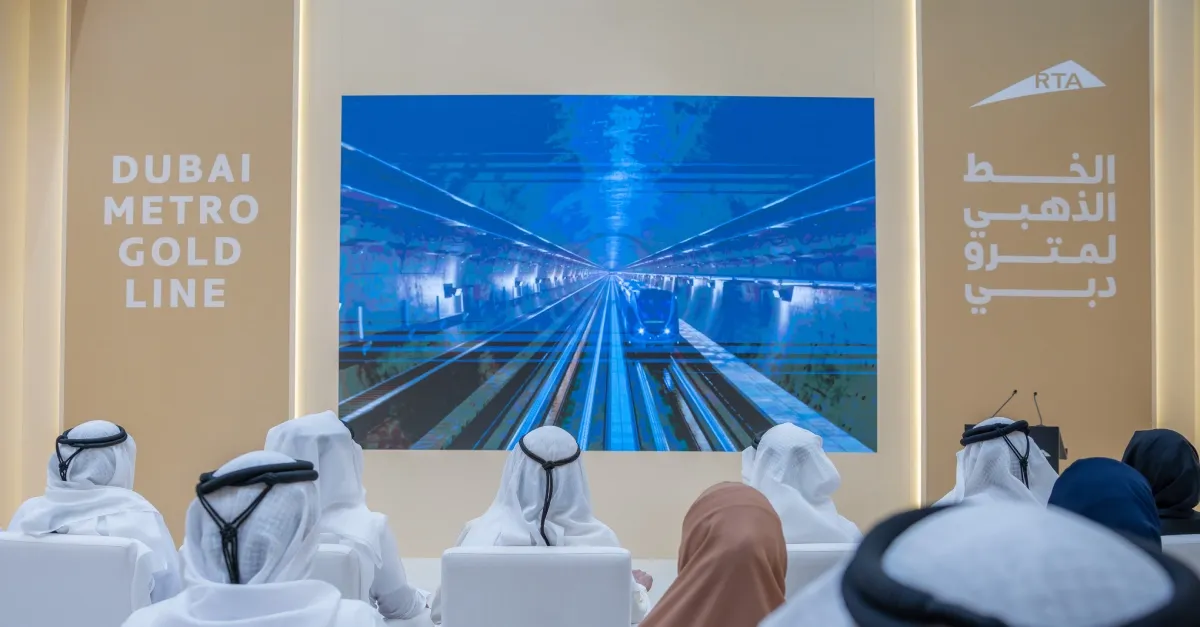
In a bid to tackle traffic congestion, Dubai is also advancing plans for the Dubai Metro Gold Line, a 42km route designed to expand capacity and improve connectivity across the emirate.
With an investment of around AED34 billion (US$9.3 billion), the line will include 18 stations serving 15 locations, running from Al Ghubaiba in the city’s historic centre to Jumeirah Golf Estates. Key districts on the route include Business Bay, Meydan, Dubai Hills, Jumeirah Village Circle and Dubai Production City.
Scheduled for completion on 9 September 2032, the project will serve an estimated 1.5 million residents and connect to 55 major real estate developments currently under construction.
The Gold Line will integrate with the wider transport network, with two interchanges on Dubai Metro’s Red Line and one on the Green Line, as well as two planned connections to the Etihad Rail passenger service.
For more information, visit www.rta.ae
Trending










Jacobs Media is a company registered in England and Wales, company number 08713328. 3rd Floor, 52 Grosvenor Gardens, London SW1W 0AU
© 2025 Jacobs Media
