




You are viewing 2 of your 2 free articles
Middle East aviation demand climbs 9.6% in November
Regional traffic outpaces global growth, reports IATA

Passenger demand across Middle East airlines surged 9.6% year‑on‑year in November 2025, outpacing the global average growth of 5.7%, according to the latest data from the International Air Transport Association (IATA). Regional carriers also grew capacity by 9.2% compared to the same month in 2024, achieving a load factor of 81.4%, up 0.3 percentage points, while the global average load factor reached a record 84.0% for November, underscoring strong travel demand worldwide.
In October 2025, Middle Eastern carriers saw a 10.7% year‑on‑year increase in demand, with growth supported by a low base a year earlier when geopolitical tensions disrupted regional traffic. Aside from these all-too-frequent shocks, the Middle East aviation sector continues to soar, underpinned by sustained investment in airport capacity, new airline ventures and the development of emerging destinations.
Industry forecasts underline this momentum, with consultancy Oliver Wyman ranking the Middle East as the world’s second fastest‑growing aviation market and predicting passenger traffic will reach 466 million in 2025, up 5.9% year on year, requiring about 10,300 extra pilots by 2030.
This regional strength is mirrored in wider market gains, with IATA’s November data showing demand growth across all major airline regions. Africa recorded the strongest increase in traffic, with revenue passenger kilometres (RPKs) up 11.2% and load factor improving 1.8 points to 74.3%.
RELATED:
3 Gulf airlines rank among world’s safest in 2026
Etihad Airways posts 21% rise in 2025 passenger numbers
Middle East airlines to post world’s highest profit margins in 2026
In Asia‑Pacific, demand rose 9.3%, capacity expanded 8.7%, and airlines filled 85.8% of available seats, the highest regional load factor. European carriers saw traffic rise 6.8%, followed by Latin America at 4.4% and North America at 4.0%, though North American airlines posted their tenth consecutive month of declining load factors, at 81.0%. Globally, international passenger traffic increased 7.7% year‑on‑year in November, while domestic markets grew by 2.7%.
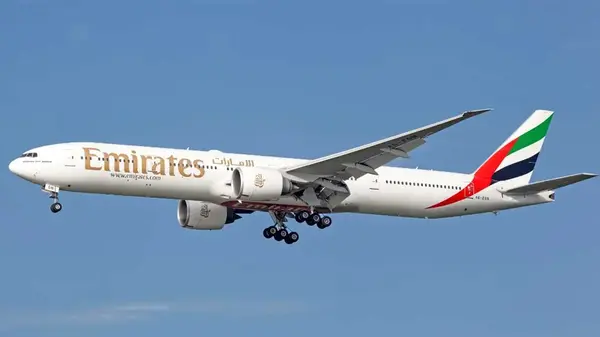
Despite these gains, IATA director general Willie Walsh cautioned that record load factors also reflect supply constraints driven by aircraft delivery delays and urged manufacturers to ramp up production to “meet the needs of their airline customers”, citing a global backlog of more than 17,000 aircraft. Among the carriers expanding their order books, Dubai‑based Emirates now has 315 widebody aircraft on order with Boeing, following a headline‑making deal at Dubai Airshow 2025 for 65 additional 777‑9s.
Looking ahead, the IATA Global Outlook forecasts Middle East airlines will deliver the world’s strongest profitability in 2026, achieving an average net margin of 9.3%, more than twice the global average of around 3.9%. Passenger traffic across the region is expected to grow 6.1% next year, outpacing capacity expansion of 5.4% and helping to sustain yield strength.
For more information, visit iata.org
Trending















Jacobs Media is a company registered in England and Wales, company number 08713328. 3rd Floor, 52 Grosvenor Gardens, London SW1W 0AU
© 2025 Jacobs Media
