




You are viewing 1 of your 2 free articles
Revamped terminal 2 opens at King Khalid Airport in Riyadh
KKIA upgrade lifts capacity 130%, serving 14 million passengers annually
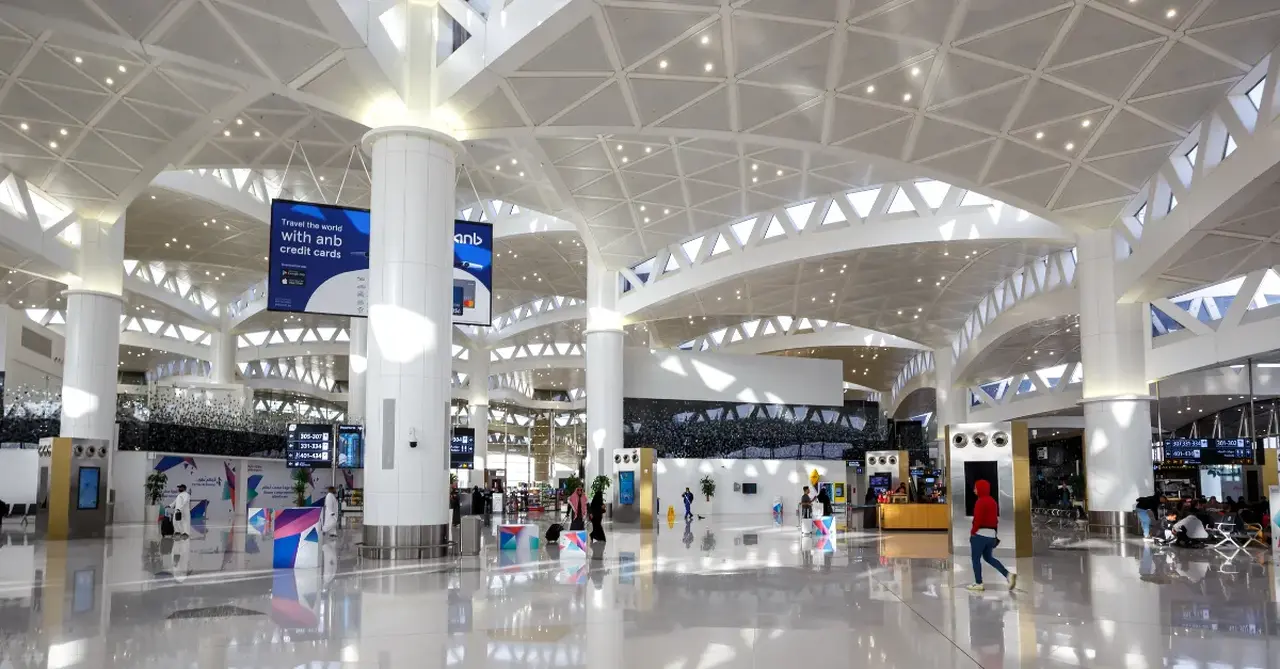
Riyadh’s King Khalid International Airport (KKIA) has opened its newly redeveloped Terminal 2, marking a major milestone in Saudi Arabia’s aviation transformation. The upgraded terminal, which completes the redevelopment of Terminals 1 and 2, lifts their combined capacity by 130%, enabling KKIA to handle 14 million passengers annually, up from six million.
The expansion introduces redesigned halls, improved passenger circulation, upgraded baggage systems and enhanced security screening, supported by more automation through self‑service kiosks and e‑gates to reduce processing times. The terminals now feature 114 check‑in counters, 43 immigration counters and 20 e‑passport gates, with 75 arrival counters and 22 e‑gates.
Under the new terminal plan, international operations by Saudi carriers will be split between Terminals 1 and 2: Flyadeal and Flynas at Terminal 1, Saudia and Riyadh Air at Terminal 2. Riyadh Air is preparing to debut with its inaugural Riyadh–London service in early 2026, followed by a Riyadh–Dubai route later in the year.
Terminals 3 and 4 will be dedicated to domestic flights, while Terminal 5 will transition to serving international routes operated by foreign airlines.
RELATED:
Saudia ranks second worldwide for on-time arrivals in 2025
Jeddah airport breaks Saudi passenger record with 53.4 million
Riyadh Air’s new loyalty programme explained
Transition to King Salman International Airport
The KKIA redevelopment paves the way for the upcoming King Salman International Airport (KSIA), which will absorb and replace KKIA as Riyadh’s main gateway. Built on the same site, KSIA has already begun work on a third runway, with construction of its first new passenger terminal under way. That terminal will accommodate up to 40 million travellers annually.
KSIA’s masterplan envisions a six‑runway hub handling 120 million passengers by 2030 and 185 million by 2050. Set to open in 2029, the airport will become the home base of Riyadh Air and a cornerstone of the Kingdom’s long‑term aviation growth.
The project aligns with the Saudi Aviation Strategy, led by the General Authority of Civil Aviation (GACA), which targets tripling passenger traffic in Saudi Arabia to 330 million and expanding connectivity to more than 250 destinations by 2030, with Riyadh Air alone targeting 100 destinations by the end of the decade.
Jeddah’s King Abdulaziz International Airport (KAIA) welcomed a record 53.4 million passengers in 2025, marking a 9% increase and the highest annual total ever recorded by an airport in Saudi Arabia placing it among the world’s 40 busiest airports.
For more information, visit kkia.sa
Trending









Latest










Jacobs Media is a company registered in England and Wales, company number 08713328. 3rd Floor, 52 Grosvenor Gardens, London SW1W 0AU
© 2025 Jacobs Media
